




The Science Lab
2 weeks ago
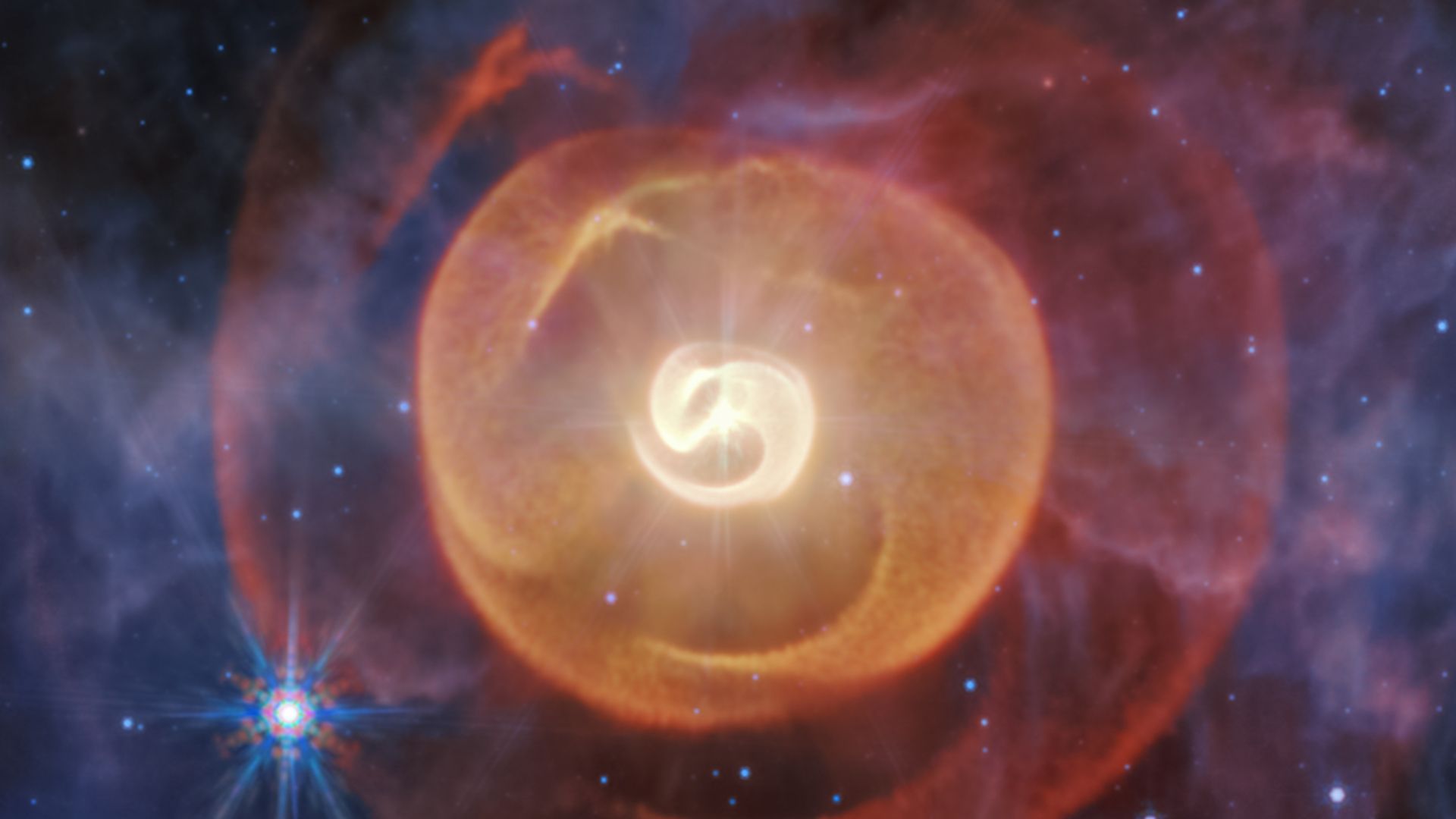
JWST Captures Cosmic Embryo in Triple Star System Apep

The unique system features two rare Wolf-Rayet stars, and a supergiant companion that is interrupting the flow of the dust shells that the two Wolf-Rayet stars cast off.
JWST Captures Cosmic Embryo in Triple Star System Apep
NASA's James Webb Space Telescope (JWST) has captured an unprecedented image of a triple star system, Apep, that resembles a cosmic embryo. This rare celestial object, nicknamed after the Egyptian god of chaos, features two Wolf-Rayet stars and a supergiant companion orbiting each other in a 190-year period. The unique arrangement is not seen in any other known system, making this discovery particularly significant.
The dust shells surrounding Apep are spiraling in a mesmerizing pattern, a result of the gravitational interactions between the two Wolf-Rayet stars and their companion. These interactions sculpt the material ejected by the stars into intricate, nested spirals that span 25 years each. This dynamic process creates a visually stunning image that highlights the complex dance of stellar evolution and cosmic structure formation.
Ryan White, a Ph.D. student at Macquarie University, emphasized the rarity of this system, noting that the next longest orbital period for a dusty Wolf-Rayet binary is about 30 years, while most systems have orbits ranging from two to ten years. The JWST's mid-infrared capabilities have allowed scientists to peer through the dust and reveal this intricate cosmic structure, offering new insights into the life cycles of massive stars and the formation of planetary systems.